Blog OLC
Andes Hoodie and a Mountain Layering System: A Practical Guide
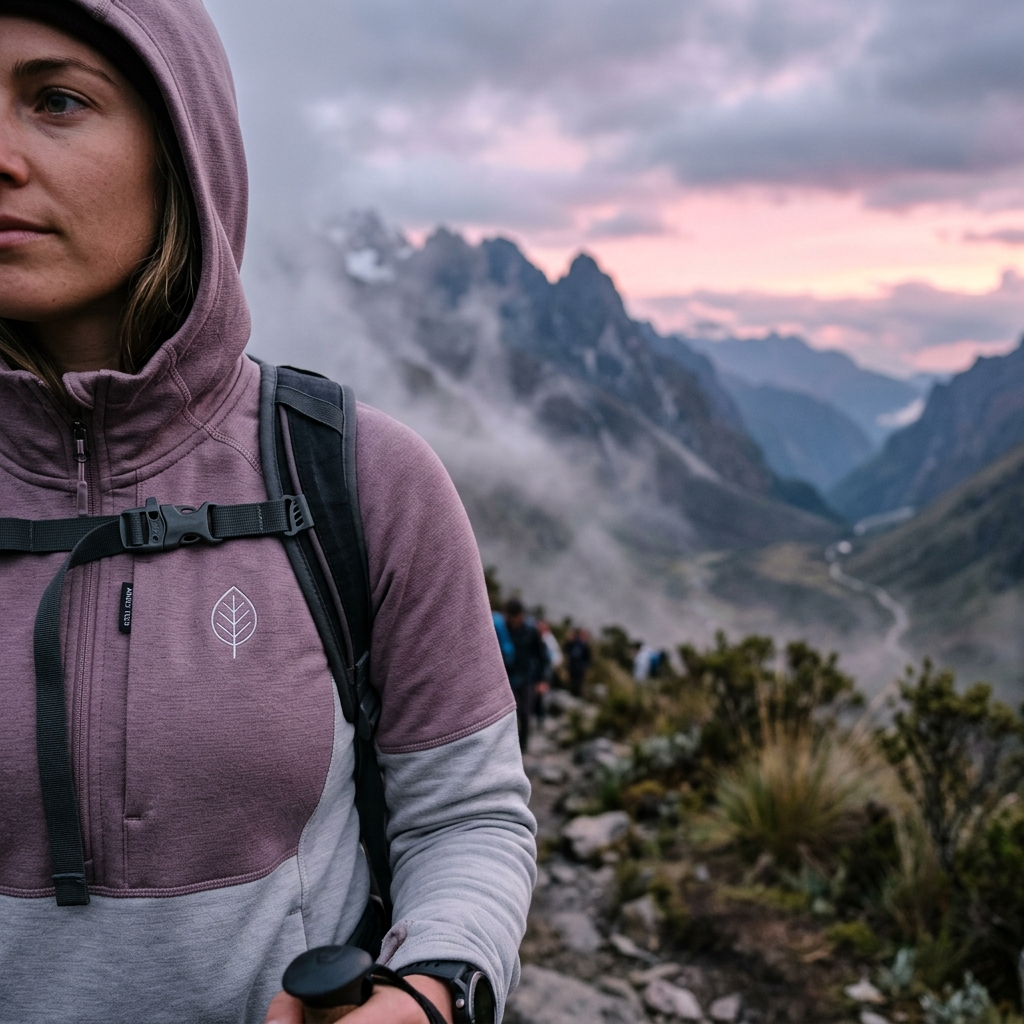
Learn how to use the zip-up Andes Hoodie as a comfortable midlayer for walks, travel, and changing temperatures.
Dressing for a mountain outing is not about finding one garment that can solve every possible condition. A more useful approach is to build a layering system that you can adjust as your pace, the wind, and the temperature change. The zip-up Andes Hoodie can work as the middle of that system: open it while moving and close it again when you stop to rest.
Start with the route rather than the photograph
Before leaving, review the duration, altitude, forecast, and expected rest points. A short walk close to the city creates different needs from a long day outside. Consider how much time you will spend moving and how much time you may remain still. Your body creates warmth on a climb but can cool quickly during a break. Separate layers let you respond without packing several garments that do the same job.
Choose a comfortable base layer
The shirt next to your skin should feel comfortable and allow natural movement. Test how it sits under backpack straps and how it feels when you lift your arms. If the layer becomes damp, changing it before a long cold pause may improve comfort. There is no universal formula because pace, weather, and personal preference differ. The goal is a manageable system, not an absolute promise.
Use the zip-up Andes Hoodie as the middle layer
The Hoodie Andes con Cremallera is made with brushed Monaco cotton and has a hood, full-length zipper, side pockets, and a soft interior. The zipper lets you change the opening without removing the whole garment, while the pockets keep small objects nearby during a pause. Review the published style at /producto/olc-andes-con-cremalle and confirm current size and color options before choosing.
This is a comfortable everyday layer, not specialized rain equipment. It does not replace a rain jacket. If precipitation is expected, add an outer layer selected for the conditions and activity. Keeping those jobs separate prevents you from expecting cotton to perform a function the catalog does not claim.
Adjust before discomfort builds
Do not wait until you feel overheated to open the zipper or place the hoodie in your backpack. On a demanding climb, you may carry it open or packed; at a viewpoint, at the start of the route, or on the return, it may become useful again. Practice these changes before a longer trip and pack the garment where it is easy to reach rather than under every other item.
Check fit with your actual backpack
Try the complete combination, not the hoodie alone. Confirm that the shoulders and sleeves let you walk freely, the zipper is easy to reach, and the hood does not interfere with what you carry. Avoid placing fragile objects where straps press the side pockets. The useful size is the one that works over your planned shirt and through real movement, rather than only looking correct while you stand still.
Prepare a repeatable system
Pack a base shirt, the zip-up Andes Hoodie, and an outer layer chosen according to the forecast. Add water, sun care, navigation, and anything the specific route requires. After returning, air the hoodie and follow its care instructions. The contextual links in this guide let you compare OLC hoodies and explore the outdoor line. Choosing by use, weather, and fit turns a visually appealing layer into a more considered purchase that can support many ordinary outings.